Skip to content

RPM Field Services

1

The Financial Cost of a Device That Isn't Transmitting

The Invisible Revenue Leak

When patients fail to engage with RPM equipment, the clinical impact is clear.
The financial impact, however, often goes unnoticed until margins begin to erode.
Estimated financial impact:
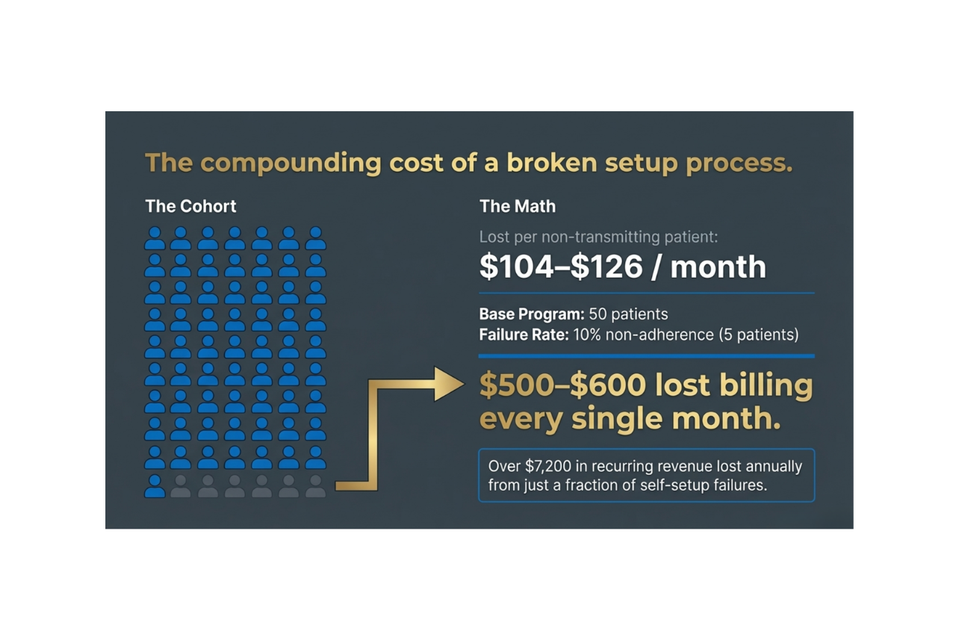
  • Loss per non-transmitting patient: $104–$126 per month
  • Example impact: A 50-patient program with 10% non-adherence can lose $500–$600 monthly in billable revenue
Many organizations invest heavily in hardware while underinvesting in operational deployment and patient engagement. This creates a silent drain on ROI, where expected reimbursement never materializes because the program never fully activates...
Learn More
2

The Myth of “Plug-and-Play” for Senior Patients

Traditional RPM deployment assumes technology is intuitive for all populations.
In reality, older adults often face barriers that make self-setup difficult:
  • Small buttons and unclear device interfaces
  • Dexterity challenges
  • Bluetooth pairing and connectivity frustration
  • Cognitive overload during onboarding
This leads to what can be called a Silent Failure Loop:
  • Providers assume monitoring has begun
  • Patients assume the device is broken or too complicated
  • No data is transmitted
  • Billing cycles close without reimbursement
By the time the issue is discovered, patient confidence and program participation have already declined...
Learn More
Next

The Solution: Full Service Installation

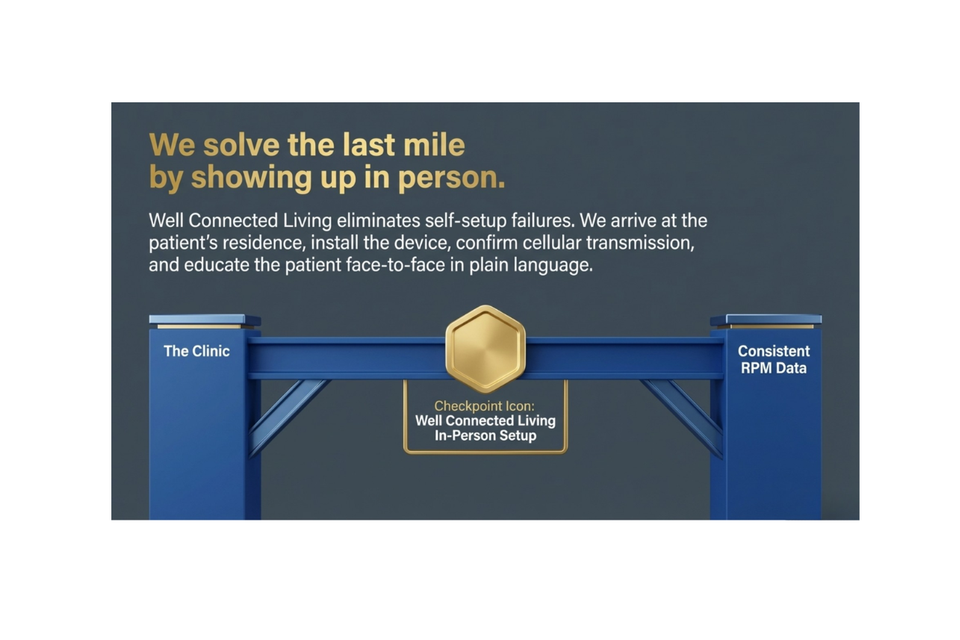
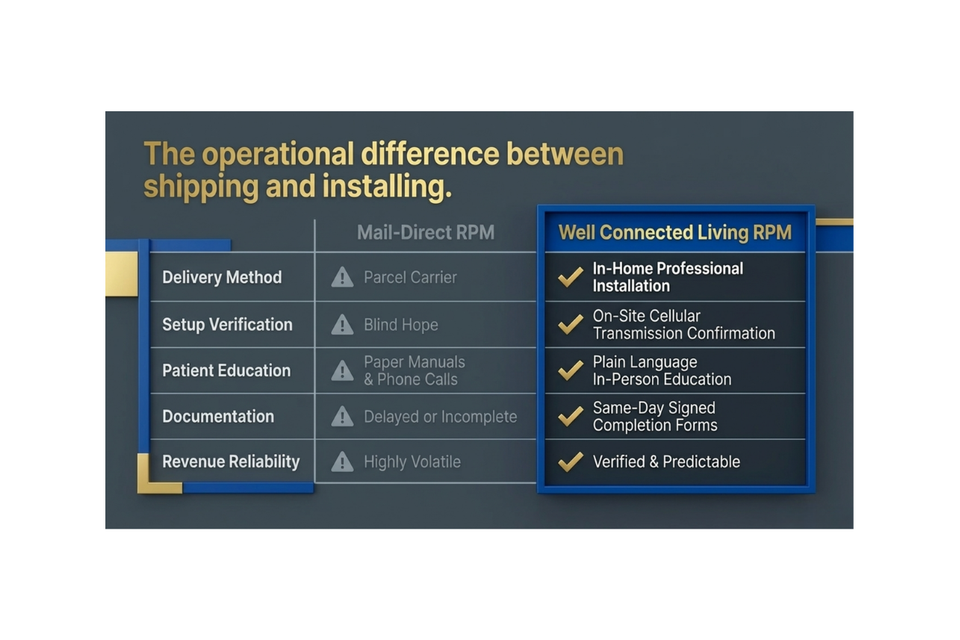
Closing the last-mile gap requires a shift from passive deployment to in-home onboarding and installation.
A structured “Full Service” visit transforms RPM activation into a controlled, high-success operational event.
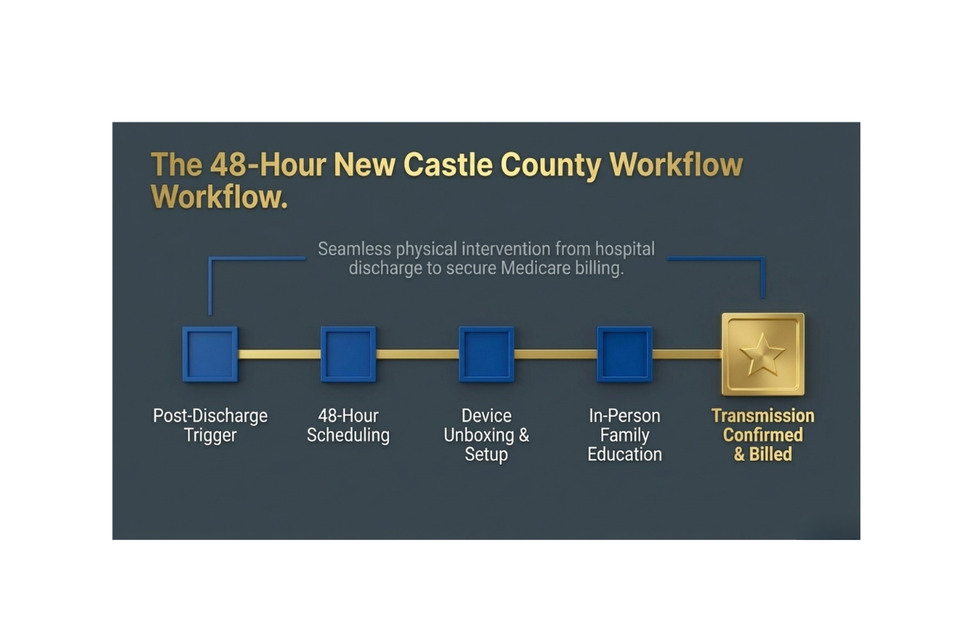
During an in-person installation, trained technicians:
  • Unbox and position equipment for daily use
  • Confirm power and connectivity
  • Validate successful data transmission before leaving
  • Provide simple, face-to-face education for patients and caregivers
Human interaction increases confidence, understanding, and long-term adherence.
Patients move from being passive recipients of technology to active participants in their own care...

 
Learn More
Next01

Operational Discipline Protects Revenue

RPM installation must be treated as a documented clinical workflow — not just a delivery task.
Best-practice operational standards include:
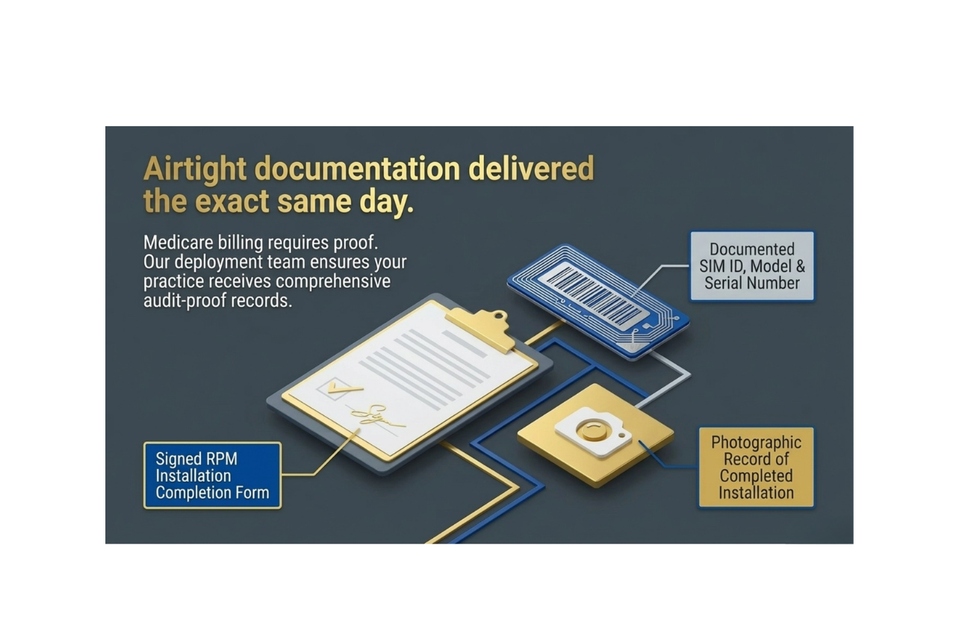
  • Recording device serial numbers and SIM identifiers at install
  • Capturing visual proof of completed setup
  • Securing signed installation confirmation forms
  • Scheduling installations within 48 hours of discharge to engage patients during high-risk transition periods
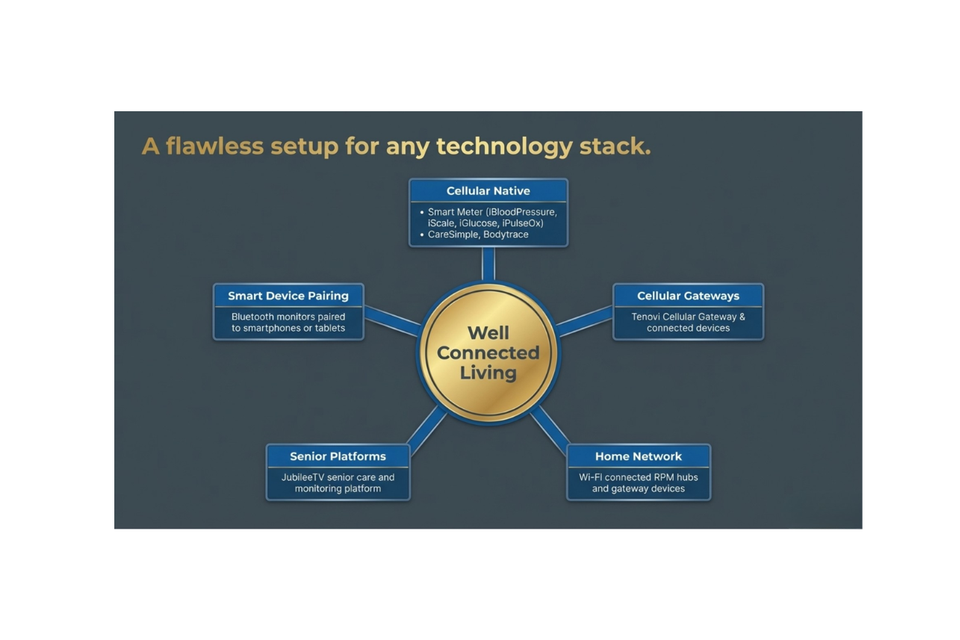
Programs must also support diverse connectivity ecosystems such as:
  • Cellular-enabled monitoring devices
  • Gateway-based systems
  • Bluetooth devices paired with tablets or senior-friendly platforms
This structured approach ensures no device “disappears into the field” without activation...
Learn More
Next03

Engagement Requires Ongoing Support

RPM success does not end with installation.
Patients may stop transmitting due to illness, travel, or technical issues.
High-performing programs treat RPM as an ongoing service, not a one-time deployment.
Effective strategies include:
  • Daily transmission monitoring
  • Monthly support visits
  • Rapid re-engagement outreach when data gaps occur
This proactive model prevents billing interruptions and strengthens both clinical outcomes and financial performance...
Learn More
Next04

The Future of RPM: High-Tech Meets High-Touch

Technology enables remote care.
Human support ensures it actually works.
Organizations that combine sophisticated monitoring tools with structured, in-home patient engagement create RPM programs that are:
  • Clinically effective
  • Operationally reliable
  • Financially sustainable
The key question for leadership teams is simple:
Is your RPM program generating measurable value or quietly operating as an unactivated logistics expense?
Learn More

When the Device Goes Silent, We're Who Shows Up.

No other provider in New Castle County offers what WCL does: a trained, insured,
HIPAA-compliant field technician who comes to your patient's home, restores the connection,
and returns signed documentation to your practice the same day.

Get Started